THE FASTEST TOOLS IN TOWN
ZIP APPLIANCE REPAIR & SERVICE

Phone: (559) 272-4265



Phone: (559) 272-4265



Appliance Repair Tips For Fresno, CA Residents
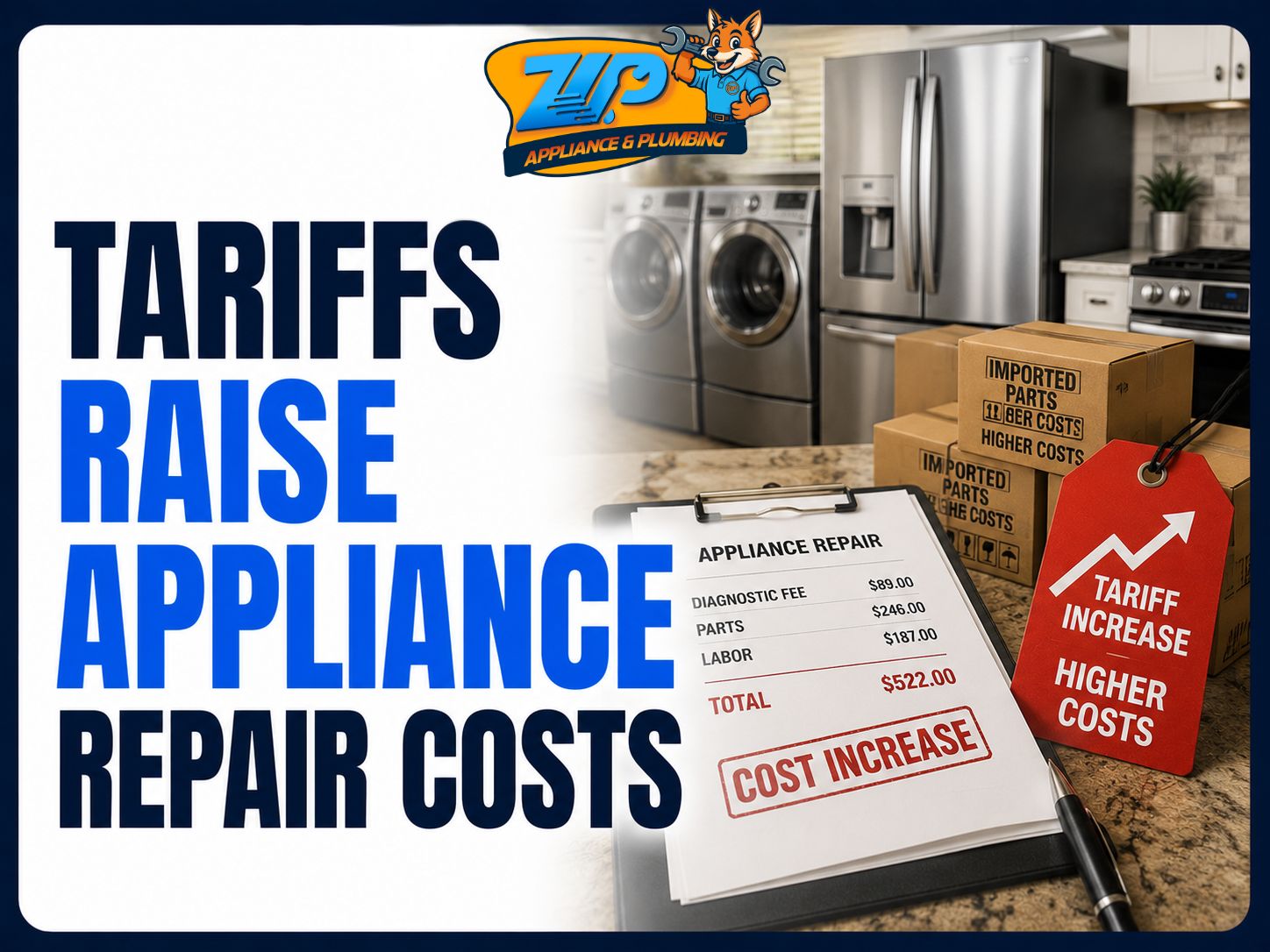
Tariffs Raise Appliance Repair Costs in Fresno
Appliance Repair, Tariffs Impact, Fresno Homeowners, Repair Costs
How Tariffs Are Making Appliance Repair More Expensive — What Fresno Homeowners Need to Know
Appliance repair in Fresno is already pricier than the national average — and new tariffs on imported parts from China and Mexico are set to push repair costs even higher in 2025 and beyond. Understanding what’s happening behind the scenes can help you budget smarter, avoid surprises, and make better repair‑versus‑replace decisions for your home. If you’re already dealing with a noisy fridge or a washer that won’t drain, working with trusted appliance repair specialists can make those rising costs easier to manage.
Appliance Repair in Fresno: Costs Are Already Climbing
If you’ve called an appliance repair company in Fresno recently, you may have noticed that the bill feels steeper than it did a few years ago. That’s not your imagination. Recent cost data shows that Fresno homeowners are paying around $260–$270 per repair, with an average near $263 — slightly above the national norm of about $250 per job in 2026, according to estimates from CostWhale and HomeYou. In other words, prices were already edging up before tariffs fully entered the picture. Choosing a local appliance repair company that understands these trends can help you avoid unnecessary expenses and repeat visits.
Nationally, appliance repair prices have been ticking up for several years, with increases of roughly 4–6% annually in 2023 and 2024, and another 3.3% or so from 2025 to 2026. Those jumps reflect familiar pressures: inflation, higher labor costs, and lingering supply chain issues. However, there’s now an additional force quietly shaping what you pay. For Fresno homeowners, there’s another, less obvious factor starting to bite into household budgets — tariffs on imported appliance parts, especially from China and Mexico.
How Tariffs Work — and Why They Hit Appliance Repair So Hard
To understand why your repair bill is rising, it helps to start with the basics. A tariff is essentially a tax on imported goods. When the U.S. or Mexico imposes tariffs on products coming from countries like China, it raises the price of those goods as they enter the country. Manufacturers, distributors, and repair companies rarely absorb those added costs entirely; they pass them along the chain until they eventually land on the consumer — in this case, you as a Fresno homeowner needing appliance repair.
Modern appliances — refrigerators, washers, dryers, dishwashers, ovens, and microwaves — rely heavily on imported parts such as:
Compressors (the heart of your refrigerator and some freezers)
Circuit boards and control boards (the “brains” that run cycles and settings)
Motors and pumps (common in washers, dryers, dishwashers, and fans)
Many of these components are manufactured in China or assembled in Mexico using Chinese parts before entering the North American market. That interconnected supply chain is exactly where tariffs start to show up in your final bill. When new or expanded China–Mexico tariffs and related trade measures take effect, they raise the wholesale cost of these parts. By the time they reach a Fresno appliance repair shop, each component may cost substantially more than it did just a year or two earlier — especially on complex jobs like refrigerator repair or high‑end washer service.
China–Mexico Tariffs: The Hidden Driver Behind 5–20% Higher Repair Costs
Building on that supply‑chain picture, it’s easier to see why recent policy changes matter. Starting in 2026, Mexico introduced new tariffs on a wide range of imports from countries without free trade agreements — with China squarely in the spotlight. Appliance goods and many electronic components now fall into tariff brackets estimated between 15% and 25%. While official documents often lump “appliance parts” into broader categories, compressors, circuit boards, and motors are all likely to be affected at similar rates.
Why does this matter to Fresno homeowners? Because the appliance supply chain is deeply interconnected across North America. Many brands source components from China, send them to Mexico for assembly, and then ship finished appliances or replacement parts into the U.S. When each step in that chain becomes more expensive, the final repair price almost inevitably rises too. When China–Mexico tariffs add 15–25% to the cost of those parts, and other U.S. trade measures layer on top, the final price that local appliance repair companies pay for imported parts can jump significantly.
Industry analysts and consumer advocates, including Consumer Reports and major trade journals, have consistently found that tariffs on imported appliance parts translate into higher repair costs for consumers. In practical terms, Fresno homeowners can expect appliance repair bills to rise 5–20% in 2025 compared with pre‑tariff levels, depending on:
The type of part needed (simple switches vs. complex control boards)
Whether the part is sourced from China, Mexico, or another country
Brand and model (premium and foreign brands often rely more heavily on imported parts)
📌 Key Takeaway: Tariffs don’t show up as a line item on your invoice, but they’re baked into the price of the compressor, circuit board, or motor your technician installs — adding 5–20% to many Fresno appliance repair jobs in 2025.
Which Appliance Repairs Are Most Affected by Tariffs on Imported Parts?
Knowing that tariffs are raising overall costs is helpful, but it’s even more useful to understand where they hit hardest. Not every appliance repair uses a tariff‑affected part. Replacing a door seal, unclogging a drain hose, or fixing a loose wire may rely mainly on labor. But when your repair involves complex components sourced from abroad, the tariff impact becomes much more obvious in the final bill. Here are some common examples for Fresno homeowners:
1. Refrigerator Compressor and Sealed System Repairs
Compressors are one of the most expensive single parts in any household appliance. If your refrigerator stops cooling and the technician traces the problem to a failed compressor, you’re looking at a repair that typically runs $200–$500 or more in parts and labor, especially for sealed‑system work. Because many compressors are imported from China or assembled in Mexico, tariffs on those imports can easily add $30–$80 or more to the wholesale price, which then flows into your repair estimate. That extra cost is one reason big refrigerator jobs feel noticeably more expensive than they used to. When you’re dealing with serious refrigerator cooling issues, understanding this cost structure can help you decide whether repair or replacement makes more sense.
2. Control Boards and Circuit Boards in Washers, Dryers, and Dishwashers
Today’s “smart” appliances rely on sophisticated electronic control boards to manage wash cycles, temperatures, and safety systems. These boards are densely packed with components, and many are produced in Asia. When tariffs increase the cost of imported electronics by 15–25%, the price of a replacement control board can jump from, say, $150 to $180 or more before labor. For a Fresno homeowner, that might mean the difference between a $275 repair and a $325 repair — just from the tariffs impact on imported parts. This is especially common with washing machine repair, dryer repair, or dishwasher repair on newer, feature‑rich models.
3. Motors and Pumps in Laundry and Kitchen Appliances
Motors drive the drum in your washer and dryer; pumps circulate water in your dishwasher. These parts are often sourced from global suppliers, and many models rely on Chinese‑made or Mexico‑assembled components. A motor that once cost a repair shop $90 might now be closer to $110–$115 after tariffs and shipping. By the time labor and markups are added, that can nudge a typical Fresno appliance repair from the low $200s toward $250–$300 or more. So if your quote for a “simple” washer or dishwasher fix seems higher than expected, the motor or pump inside may be the reason. When you call for laundry appliance repair or help with dishwasher performance issues, those hidden part costs are often a big piece of the estimate.
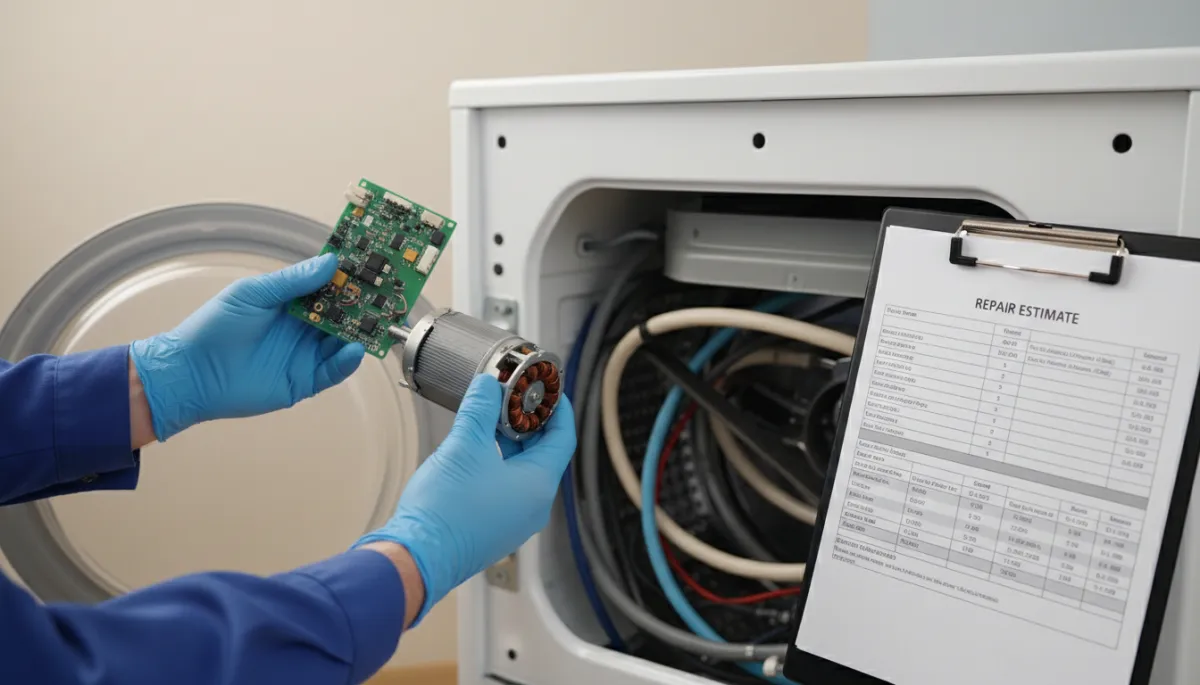
Imported motors and circuit boards are where tariff-driven price increases hit hardest.
Fresno Homeowners: What a 5–20% Increase in Repair Costs Looks Like in Real Dollars
Once you see which parts are most affected, the next logical question is: how much more will I actually pay? Abstract percentages can feel distant. To make this more concrete, let’s translate that 5–20% increase into real‑world numbers for Fresno homeowners, using the city’s current average repair cost of around $263 as a baseline:
5% increase: A $260 repair becomes about $273.
10% increase: That same repair would run roughly $286.
20% increase: Now you’re looking at about $312.
For a single repair, the difference may seem manageable. But most households rely on multiple major appliances. Over a few years, as refrigerators, washers, and dishwashers each need attention, the added cost from tariffs on imported parts can easily climb into the hundreds of dollars for an average Fresno family — money that might otherwise go toward savings, home improvements, or other essentials. That’s why choosing the right service partner matters more than ever. Partnering with professional appliance repair services that diagnose accurately and repair efficiently can help keep those cumulative costs under control.
💡 Pro Tip: When you receive a quote, ask your technician which parts are driving the cost. If compressors, circuit boards, or motors are involved, tariffs are likely part of the reason the estimate is higher than you expected.
Beyond Tariffs: Other Factors Pushing Fresno Appliance Repair Costs Up
Of course, tariffs are only one piece of the puzzle. While tariffs on China–Mexico appliance parts are a major new pressure, they’re not the only reason repair costs in Fresno are rising. To understand your bill fully — and to spot a fair price — it helps to know the other forces at work:
Labor and expertise: Skilled technicians are in demand, especially in fast‑growing regions like Fresno. Wages, training, insurance, and licensing all contribute to higher hourly rates.
Diagnostic and trip fees: Many companies charge a flat fee to visit your home and diagnose the problem, often rolled into the final repair cost if you proceed with the work.
Brand and model complexity: High‑end or specialty brands may require proprietary tools, software, or parts, which can add to both time and parts cost.
Emergency or same‑day service: Calling for urgent repairs — especially during Fresno’s hot summers when refrigerators and freezers can’t wait — often adds a premium.
Tariffs layer onto these existing pressures, especially on jobs involving imported parts. That’s why being informed about both the tariffs' impact and local market conditions is so important for Fresno homeowners. When you’re comparing Fresno appliance repair experts, asking about these factors can help you choose a company that’s transparent and fair.
How to Read and Question an Appliance Repair Estimate in the Tariff Era
Once you know what drives costs, the next step is learning how to respond when a quote lands in your inbox. Transparency builds trust. Reputable Fresno appliance repair companies understand that homeowners are worried about rising costs and will usually explain where your money is going if you ask. Here’s how to approach an estimate in today’s tariff‑affected environment:
Ask for a parts‑and‑labor breakdown. A clear quote should separate the cost of the part (compressor, circuit board, motor, etc.) from the technician’s time. This makes it easier to see how much of the total comes from imported components that may be affected by tariffs.
Ask if OEM or aftermarket parts are being used. Original equipment manufacturer (OEM) parts often come directly from brands that rely on global supply chains and may carry higher tariff‑driven costs. Quality aftermarket parts can sometimes offer savings, though availability varies by model and some Fresno repair companies prefer OEM for reliability and warranty reasons.
Clarify any diagnostic or trip fees. Find out whether these fees are applied separately or credited toward the repair if you approve the work. This helps you compare quotes fairly across different providers.
Ask about warranties on parts and labor. If tariffs are making parts more expensive, a solid warranty can protect you from paying again if a newly installed imported part fails prematurely.
📌 Key Takeaway: You may not be able to avoid tariffs, but you can avoid confusion. A detailed, written estimate helps you understand exactly how China–Mexico tariffs and other factors affect your appliance repair bill.
Repair or Replace? Re‑Thinking the 50% Rule in Light of Tariffs
Once you’ve seen the estimate and understand what’s behind it, you still have a big decision to make. A common guideline is the 50% rule: if the cost to fix an appliance is more than half the price of a new one — especially if your current unit is older — replacement may be wiser than repair. But as tariffs impact parts prices and push appliance repair costs 5–20% higher, Fresno homeowners may find that more jobs creep closer to that 50% threshold.
When you’re on the fence, consider these factors:
Age of the appliance: A 12‑year‑old refrigerator with a failed compressor affected by tariffs may be a better candidate for replacement. A 4‑year‑old washer with a faulty control board is more likely worth repairing, even with higher parts costs.
Energy efficiency: Newer appliances often use less water and electricity. In Fresno’s hot climate and with California’s utility rates, energy savings from a replacement may offset higher upfront costs over time.
Future repair risk: If one tariff‑affected part has failed, others may not be far behind, especially on aging units. Your technician can often give an honest assessment of whether more repairs are likely soon.
A trustworthy Fresno appliance repair professional won’t pressure you either way but will help you weigh current repair costs against the price and benefits of a new unit, especially under changing tariff conditions. Whether you’re weighing a major stove and oven repair or considering a new dishwasher, this framework can guide your decision.
Smart Ways Fresno Homeowners Can Soften the Blow of Tariff‑Driven Costs
Even if you decide a repair is the right move, you’re not helpless against higher prices. While you can’t control international trade policy, you do have options to manage how China–Mexico tariffs and other cost pressures affect your home budget. Here are practical steps Fresno homeowners can take:
1. Prioritize Regular Maintenance
Simple habits can significantly extend the life of your appliances and reduce the chance you’ll need an expensive imported part:
Clean refrigerator coils and ensure good airflow around the unit so the compressor doesn’t overwork and fail prematurely. Scheduling periodic refrigerator maintenance can also catch small issues before they turn into costly breakdowns.
Avoid overloading washers and dryers, which puts strain on motors and belts. If you notice your washer not spinning or your dryer not heating properly, addressing it early can prevent more expensive motor or control board failures.
Clean dishwasher filters and run occasional maintenance cycles to protect pumps and spray arms. Professional dishwasher maintenance can also help extend the life of these components.
2. Check Manufacturer and Home Warranties
Before paying out of pocket for a tariff‑affected component like a compressor or control board, review:
Manufacturer warranties — Some brands offer extended coverage on sealed systems or specific parts, even after the basic warranty ends.
Home warranty plans — These can help offset high appliance repair bills, though coverage details and service quality vary. Always read the fine print to see which parts and appliances are included.
3. Get Multiple Quotes for Major Repairs
For significant jobs — like a refrigerator compressor replacement or a high‑end washer control board — it’s reasonable to get two or three quotes from reputable Fresno appliance repair companies. Differences in sourcing, markup, and labor rates can add up, especially when imported parts are involved. Just be sure you’re comparing similar parts (OEM vs. aftermarket) and similar warranty terms. If you’re not sure where to start, reaching out to established appliance repair providers in Fresno can give you a solid benchmark.
4. Plan Ahead for Appliance Replacement
Instead of waiting for a catastrophic failure, start budgeting for replacement once a major appliance passes the 8–10‑year mark or begins needing frequent repairs. This gives you time to:
Watch for sales and rebates on energy‑efficient models.
Research brands with strong reliability records and accessible parts.
Avoid rushed decisions during emergencies, when you may be more vulnerable to high prices.
What Fresno Homeowners Should Watch for in the Next Few Years
Looking ahead, it’s helpful to zoom back out to the bigger picture. Trade policy is rarely static. The China–Mexico tariffs that are currently raising the cost of appliance parts may change as negotiations evolve, domestic manufacturing ramps up, or new trade agreements come into play. At the same time, broader economic factors — inflation, fuel prices, labor shortages — will continue to shape what Fresno homeowners pay for appliance repair.
In the near term, though, the outlook is clear: with tariffs on compressors, circuit boards, and motors imported from China and Mexico, repair costs in Fresno are expected to remain elevated, running roughly 5–20% higher than they would be without these trade measures. Staying informed — and working with transparent, trustworthy local repair professionals — is your best defense. Building a relationship with a reliable local appliance repair company now can give you peace of mind as prices continue to fluctuate.
Final Thoughts: Transparency Builds Trust in a Changing Cost Landscape
All of these moving pieces can feel overwhelming, but they ultimately point to one central idea: clarity matters. For Fresno homeowners, the story behind rising appliance repair prices is bigger than any single technician or company. It’s shaped by international trade disputes, China–Mexico tariffs, global supply chains, and local cost of living. But that doesn’t mean you’re powerless or that every higher bill is inevitable or fair. When repair companies explain how imported parts, tariffs, labor, and overhead combine to produce your estimate, they’re not just justifying a price — they’re inviting you into the conversation as an informed partner.
Understanding how tariffs on parts from China and Mexico are pushing repair costs up 5–20% in 2025 helps you plan, budget, and decide when to repair and when to replace. It also helps you recognize and appreciate the Fresno appliance repair professionals who are honest about these pressures, provide detailed estimates, and help you find the most cost‑effective solution for your home. If you're experiencing appliance problems, contact our Fresno appliance repair experts or call 559-272-4265 to schedule service today.
As you navigate your next repair — whether it’s a humming refrigerator, a silent dishwasher, or a washer that won’t spin — remember that asking questions about parts, sourcing, and tariffs isn’t just allowed; it’s wise. In a world where global trade policy can reach right into your Fresno kitchen, a little transparency goes a long way toward protecting your budget and your peace of mind.

Tariffs Raise Appliance Repair Costs in Fresno
Appliance Repair, Tariffs Impact, Fresno Homeowners, Repair Costs
How Tariffs Are Making Appliance Repair More Expensive — What Fresno Homeowners Need to Know
Appliance repair in Fresno is already pricier than the national average — and new tariffs on imported parts from China and Mexico are set to push repair costs even higher in 2025 and beyond. Understanding what’s happening behind the scenes can help you budget smarter, avoid surprises, and make better repair‑versus‑replace decisions for your home. If you’re already dealing with a noisy fridge or a washer that won’t drain, working with trusted appliance repair specialists can make those rising costs easier to manage.
Appliance Repair in Fresno: Costs Are Already Climbing
If you’ve called an appliance repair company in Fresno recently, you may have noticed that the bill feels steeper than it did a few years ago. That’s not your imagination. Recent cost data shows that Fresno homeowners are paying around $260–$270 per repair, with an average near $263 — slightly above the national norm of about $250 per job in 2026, according to estimates from CostWhale and HomeYou. In other words, prices were already edging up before tariffs fully entered the picture. Choosing a local appliance repair company that understands these trends can help you avoid unnecessary expenses and repeat visits.
Nationally, appliance repair prices have been ticking up for several years, with increases of roughly 4–6% annually in 2023 and 2024, and another 3.3% or so from 2025 to 2026. Those jumps reflect familiar pressures: inflation, higher labor costs, and lingering supply chain issues. However, there’s now an additional force quietly shaping what you pay. For Fresno homeowners, there’s another, less obvious factor starting to bite into household budgets — tariffs on imported appliance parts, especially from China and Mexico.
How Tariffs Work — and Why They Hit Appliance Repair So Hard
To understand why your repair bill is rising, it helps to start with the basics. A tariff is essentially a tax on imported goods. When the U.S. or Mexico imposes tariffs on products coming from countries like China, it raises the price of those goods as they enter the country. Manufacturers, distributors, and repair companies rarely absorb those added costs entirely; they pass them along the chain until they eventually land on the consumer — in this case, you as a Fresno homeowner needing appliance repair.
Modern appliances — refrigerators, washers, dryers, dishwashers, ovens, and microwaves — rely heavily on imported parts such as:
Compressors (the heart of your refrigerator and some freezers)
Circuit boards and control boards (the “brains” that run cycles and settings)
Motors and pumps (common in washers, dryers, dishwashers, and fans)
Many of these components are manufactured in China or assembled in Mexico using Chinese parts before entering the North American market. That interconnected supply chain is exactly where tariffs start to show up in your final bill. When new or expanded China–Mexico tariffs and related trade measures take effect, they raise the wholesale cost of these parts. By the time they reach a Fresno appliance repair shop, each component may cost substantially more than it did just a year or two earlier — especially on complex jobs like refrigerator repair or high‑end washer service.
China–Mexico Tariffs: The Hidden Driver Behind 5–20% Higher Repair Costs
Building on that supply‑chain picture, it’s easier to see why recent policy changes matter. Starting in 2026, Mexico introduced new tariffs on a wide range of imports from countries without free trade agreements — with China squarely in the spotlight. Appliance goods and many electronic components now fall into tariff brackets estimated between 15% and 25%. While official documents often lump “appliance parts” into broader categories, compressors, circuit boards, and motors are all likely to be affected at similar rates.
Why does this matter to Fresno homeowners? Because the appliance supply chain is deeply interconnected across North America. Many brands source components from China, send them to Mexico for assembly, and then ship finished appliances or replacement parts into the U.S. When each step in that chain becomes more expensive, the final repair price almost inevitably rises too. When China–Mexico tariffs add 15–25% to the cost of those parts, and other U.S. trade measures layer on top, the final price that local appliance repair companies pay for imported parts can jump significantly.
Industry analysts and consumer advocates, including Consumer Reports and major trade journals, have consistently found that tariffs on imported appliance parts translate into higher repair costs for consumers. In practical terms, Fresno homeowners can expect appliance repair bills to rise 5–20% in 2025 compared with pre‑tariff levels, depending on:
The type of part needed (simple switches vs. complex control boards)
Whether the part is sourced from China, Mexico, or another country
Brand and model (premium and foreign brands often rely more heavily on imported parts)
📌 Key Takeaway: Tariffs don’t show up as a line item on your invoice, but they’re baked into the price of the compressor, circuit board, or motor your technician installs — adding 5–20% to many Fresno appliance repair jobs in 2025.
Which Appliance Repairs Are Most Affected by Tariffs on Imported Parts?
Knowing that tariffs are raising overall costs is helpful, but it’s even more useful to understand where they hit hardest. Not every appliance repair uses a tariff‑affected part. Replacing a door seal, unclogging a drain hose, or fixing a loose wire may rely mainly on labor. But when your repair involves complex components sourced from abroad, the tariff impact becomes much more obvious in the final bill. Here are some common examples for Fresno homeowners:
1. Refrigerator Compressor and Sealed System Repairs
Compressors are one of the most expensive single parts in any household appliance. If your refrigerator stops cooling and the technician traces the problem to a failed compressor, you’re looking at a repair that typically runs $200–$500 or more in parts and labor, especially for sealed‑system work. Because many compressors are imported from China or assembled in Mexico, tariffs on those imports can easily add $30–$80 or more to the wholesale price, which then flows into your repair estimate. That extra cost is one reason big refrigerator jobs feel noticeably more expensive than they used to. When you’re dealing with serious refrigerator cooling issues, understanding this cost structure can help you decide whether repair or replacement makes more sense.
2. Control Boards and Circuit Boards in Washers, Dryers, and Dishwashers
Today’s “smart” appliances rely on sophisticated electronic control boards to manage wash cycles, temperatures, and safety systems. These boards are densely packed with components, and many are produced in Asia. When tariffs increase the cost of imported electronics by 15–25%, the price of a replacement control board can jump from, say, $150 to $180 or more before labor. For a Fresno homeowner, that might mean the difference between a $275 repair and a $325 repair — just from the tariffs impact on imported parts. This is especially common with washing machine repair, dryer repair, or dishwasher repair on newer, feature‑rich models.
3. Motors and Pumps in Laundry and Kitchen Appliances
Motors drive the drum in your washer and dryer; pumps circulate water in your dishwasher. These parts are often sourced from global suppliers, and many models rely on Chinese‑made or Mexico‑assembled components. A motor that once cost a repair shop $90 might now be closer to $110–$115 after tariffs and shipping. By the time labor and markups are added, that can nudge a typical Fresno appliance repair from the low $200s toward $250–$300 or more. So if your quote for a “simple” washer or dishwasher fix seems higher than expected, the motor or pump inside may be the reason. When you call for laundry appliance repair or help with dishwasher performance issues, those hidden part costs are often a big piece of the estimate.
Imported motors and circuit boards are where tariff-driven price increases hit hardest.
Fresno Homeowners: What a 5–20% Increase in Repair Costs Looks Like in Real Dollars
Once you see which parts are most affected, the next logical question is: how much more will I actually pay? Abstract percentages can feel distant. To make this more concrete, let’s translate that 5–20% increase into real‑world numbers for Fresno homeowners, using the city’s current average repair cost of around $263 as a baseline:
5% increase: A $260 repair becomes about $273.
10% increase: That same repair would run roughly $286.
20% increase: Now you’re looking at about $312.
For a single repair, the difference may seem manageable. But most households rely on multiple major appliances. Over a few years, as refrigerators, washers, and dishwashers each need attention, the added cost from tariffs on imported parts can easily climb into the hundreds of dollars for an average Fresno family — money that might otherwise go toward savings, home improvements, or other essentials. That’s why choosing the right service partner matters more than ever. Partnering with professional appliance repair services that diagnose accurately and repair efficiently can help keep those cumulative costs under control.
💡 Pro Tip: When you receive a quote, ask your technician which parts are driving the cost. If compressors, circuit boards, or motors are involved, tariffs are likely part of the reason the estimate is higher than you expected.
Beyond Tariffs: Other Factors Pushing Fresno Appliance Repair Costs Up
Of course, tariffs are only one piece of the puzzle. While tariffs on China–Mexico appliance parts are a major new pressure, they’re not the only reason repair costs in Fresno are rising. To understand your bill fully — and to spot a fair price — it helps to know the other forces at work:
Labor and expertise: Skilled technicians are in demand, especially in fast‑growing regions like Fresno. Wages, training, insurance, and licensing all contribute to higher hourly rates.
Diagnostic and trip fees: Many companies charge a flat fee to visit your home and diagnose the problem, often rolled into the final repair cost if you proceed with the work.
Brand and model complexity: High‑end or specialty brands may require proprietary tools, software, or parts, which can add to both time and parts cost.
Emergency or same‑day service: Calling for urgent repairs — especially during Fresno’s hot summers when refrigerators and freezers can’t wait — often adds a premium.
Tariffs layer onto these existing pressures, especially on jobs involving imported parts. That’s why being informed about both the tariffs' impact and local market conditions is so important for Fresno homeowners. When you’re comparing Fresno appliance repair experts, asking about these factors can help you choose a company that’s transparent and fair.
How to Read and Question an Appliance Repair Estimate in the Tariff Era
Once you know what drives costs, the next step is learning how to respond when a quote lands in your inbox. Transparency builds trust. Reputable Fresno appliance repair companies understand that homeowners are worried about rising costs and will usually explain where your money is going if you ask. Here’s how to approach an estimate in today’s tariff‑affected environment:
Ask for a parts‑and‑labor breakdown. A clear quote should separate the cost of the part (compressor, circuit board, motor, etc.) from the technician’s time. This makes it easier to see how much of the total comes from imported components that may be affected by tariffs.
Ask if OEM or aftermarket parts are being used. Original equipment manufacturer (OEM) parts often come directly from brands that rely on global supply chains and may carry higher tariff‑driven costs. Quality aftermarket parts can sometimes offer savings, though availability varies by model and some Fresno repair companies prefer OEM for reliability and warranty reasons.
Clarify any diagnostic or trip fees. Find out whether these fees are applied separately or credited toward the repair if you approve the work. This helps you compare quotes fairly across different providers.
Ask about warranties on parts and labor. If tariffs are making parts more expensive, a solid warranty can protect you from paying again if a newly installed imported part fails prematurely.
📌 Key Takeaway: You may not be able to avoid tariffs, but you can avoid confusion. A detailed, written estimate helps you understand exactly how China–Mexico tariffs and other factors affect your appliance repair bill.
Repair or Replace? Re‑Thinking the 50% Rule in Light of Tariffs
Once you’ve seen the estimate and understand what’s behind it, you still have a big decision to make. A common guideline is the 50% rule: if the cost to fix an appliance is more than half the price of a new one — especially if your current unit is older — replacement may be wiser than repair. But as tariffs impact parts prices and push appliance repair costs 5–20% higher, Fresno homeowners may find that more jobs creep closer to that 50% threshold.
When you’re on the fence, consider these factors:
Age of the appliance: A 12‑year‑old refrigerator with a failed compressor affected by tariffs may be a better candidate for replacement. A 4‑year‑old washer with a faulty control board is more likely worth repairing, even with higher parts costs.
Energy efficiency: Newer appliances often use less water and electricity. In Fresno’s hot climate and with California’s utility rates, energy savings from a replacement may offset higher upfront costs over time.
Future repair risk: If one tariff‑affected part has failed, others may not be far behind, especially on aging units. Your technician can often give an honest assessment of whether more repairs are likely soon.
A trustworthy Fresno appliance repair professional won’t pressure you either way but will help you weigh current repair costs against the price and benefits of a new unit, especially under changing tariff conditions. Whether you’re weighing a major stove and oven repair or considering a new dishwasher, this framework can guide your decision.
Smart Ways Fresno Homeowners Can Soften the Blow of Tariff‑Driven Costs
Even if you decide a repair is the right move, you’re not helpless against higher prices. While you can’t control international trade policy, you do have options to manage how China–Mexico tariffs and other cost pressures affect your home budget. Here are practical steps Fresno homeowners can take:
1. Prioritize Regular Maintenance
Simple habits can significantly extend the life of your appliances and reduce the chance you’ll need an expensive imported part:
Clean refrigerator coils and ensure good airflow around the unit so the compressor doesn’t overwork and fail prematurely. Scheduling periodic refrigerator maintenance can also catch small issues before they turn into costly breakdowns.
Avoid overloading washers and dryers, which puts strain on motors and belts. If you notice your washer not spinning or your dryer not heating properly, addressing it early can prevent more expensive motor or control board failures.
Clean dishwasher filters and run occasional maintenance cycles to protect pumps and spray arms. Professional dishwasher maintenance can also help extend the life of these components.
2. Check Manufacturer and Home Warranties
Before paying out of pocket for a tariff‑affected component like a compressor or control board, review:
Manufacturer warranties — Some brands offer extended coverage on sealed systems or specific parts, even after the basic warranty ends.
Home warranty plans — These can help offset high appliance repair bills, though coverage details and service quality vary. Always read the fine print to see which parts and appliances are included.
3. Get Multiple Quotes for Major Repairs
For significant jobs — like a refrigerator compressor replacement or a high‑end washer control board — it’s reasonable to get two or three quotes from reputable Fresno appliance repair companies. Differences in sourcing, markup, and labor rates can add up, especially when imported parts are involved. Just be sure you’re comparing similar parts (OEM vs. aftermarket) and similar warranty terms. If you’re not sure where to start, reaching out to established appliance repair providers in Fresno can give you a solid benchmark.
4. Plan Ahead for Appliance Replacement
Instead of waiting for a catastrophic failure, start budgeting for replacement once a major appliance passes the 8–10‑year mark or begins needing frequent repairs. This gives you time to:
Watch for sales and rebates on energy‑efficient models.
Research brands with strong reliability records and accessible parts.
Avoid rushed decisions during emergencies, when you may be more vulnerable to high prices.
What Fresno Homeowners Should Watch for in the Next Few Years
Looking ahead, it’s helpful to zoom back out to the bigger picture. Trade policy is rarely static. The China–Mexico tariffs that are currently raising the cost of appliance parts may change as negotiations evolve, domestic manufacturing ramps up, or new trade agreements come into play. At the same time, broader economic factors — inflation, fuel prices, labor shortages — will continue to shape what Fresno homeowners pay for appliance repair.
In the near term, though, the outlook is clear: with tariffs on compressors, circuit boards, and motors imported from China and Mexico, repair costs in Fresno are expected to remain elevated, running roughly 5–20% higher than they would be without these trade measures. Staying informed — and working with transparent, trustworthy local repair professionals — is your best defense. Building a relationship with a reliable local appliance repair company now can give you peace of mind as prices continue to fluctuate.
Final Thoughts: Transparency Builds Trust in a Changing Cost Landscape
All of these moving pieces can feel overwhelming, but they ultimately point to one central idea: clarity matters. For Fresno homeowners, the story behind rising appliance repair prices is bigger than any single technician or company. It’s shaped by international trade disputes, China–Mexico tariffs, global supply chains, and local cost of living. But that doesn’t mean you’re powerless or that every higher bill is inevitable or fair. When repair companies explain how imported parts, tariffs, labor, and overhead combine to produce your estimate, they’re not just justifying a price — they’re inviting you into the conversation as an informed partner.
Understanding how tariffs on parts from China and Mexico are pushing repair costs up 5–20% in 2025 helps you plan, budget, and decide when to repair and when to replace. It also helps you recognize and appreciate the Fresno appliance repair professionals who are honest about these pressures, provide detailed estimates, and help you find the most cost‑effective solution for your home. If you're experiencing appliance problems, contact our Fresno appliance repair experts or call 559-272-4265 to schedule service today.
As you navigate your next repair — whether it’s a humming refrigerator, a silent dishwasher, or a washer that won’t spin — remember that asking questions about parts, sourcing, and tariffs isn’t just allowed; it’s wise. In a world where global trade policy can reach right into your Fresno kitchen, a little transparency goes a long way toward protecting your budget and your peace of mind.
If your dryer has been giving you problems, contact Zip Appliance Repair & Service at (559) 272-4265
Appliance Repair In A Zip
If you need a dryer repair call our Team at (559) 272-4265, or visit our online scheduling page to request service.
Appliance Repair
HAVE A QUESTION, CALL (559) 272-4265

Online Offers
Take advantage of our online discount offers - save time and money...

Residential & Commercial appliances
See what our company can do for you

Appliance Repair Tips
If your appliance is not working properly...
1405 Commercial Way ste 100
Bakersfield, CA 93309
Lic # 1116346
Equipment We Sevice
- A Call To Confirm Your Appointment Time
- A Email Detailing Your Assigned Technician
- Information Needed Before The Repair Can Be Started
- An Estimate Of Work To Be Done
© 2026 ZIP APPLIANCE REPAIR & SERVICE LLC