THE FASTEST TOOLS IN TOWN
ZIP APPLIANCE REPAIR & SERVICE

Phone: (559) 272-4265



Phone: (559) 272-4265



Washer Repair in Clovis, CA - ZIP Appliance Repair
Expert Washer Repair Services - Quick, Reliable, and Local

Welcome to ZIP Appliance Repair, your leading provider of washer repair services in Clovis, CA. We understand the importance of having a fully functional washing machine in your home—whether you're dealing with mountains of family laundry or the weekly wash. Our expert technicians are equipped to handle a wide range of washer issues, ensuring that your appliance runs smoothly with minimal downtime. Trust us to provide efficient, reliable washer repair services tailored to meet your needs.
If your washer has been giving you problems, contact Zip Appliance Repair & Service at (559) 272-4265
Why Choose Us?
At ZIP Appliance Repair, we are committed to providing exceptional washer repair services to the Clovis community. Our team of certified technicians is skilled in handling a variety of brands, including market leaders like Samsung and LG. We pride ourselves on our rapid response times, ensuring that your washer issues are resolved quickly and effectively, minimizing any inconvenience to your daily routine. Our steadfast commitment to customer satisfaction and our ability to deliver reliable, high-quality repairs make us your best choice for washer maintenance and repair services in Clovis, CA.
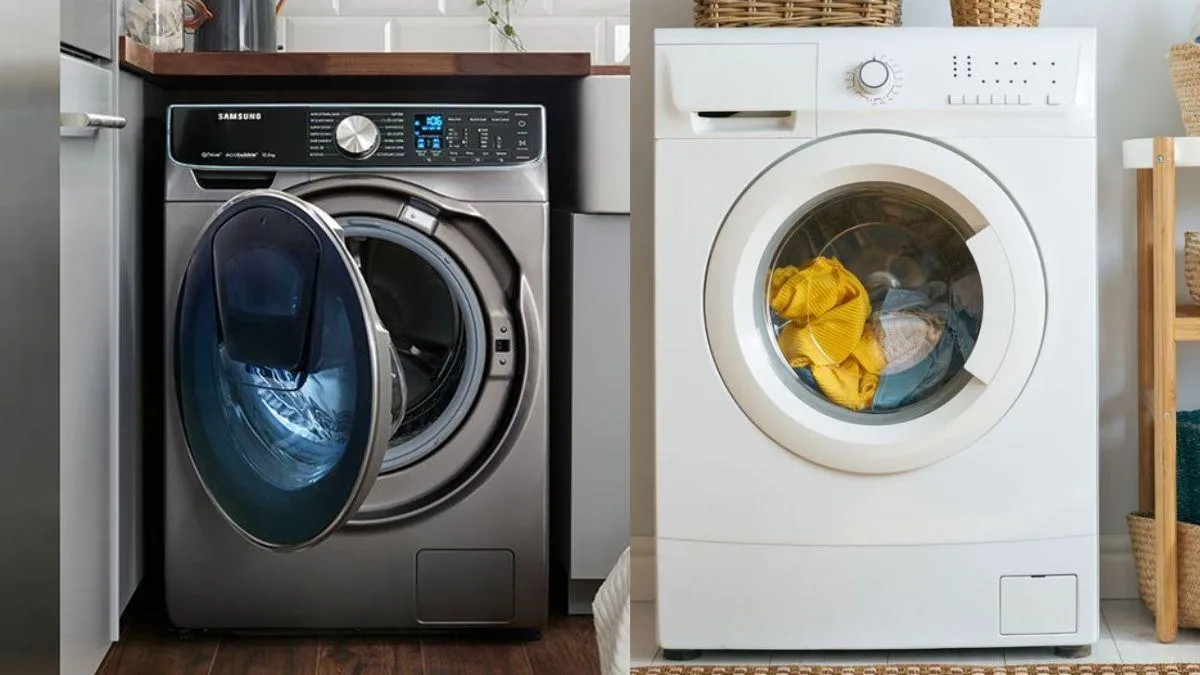
Common Washer Problems We Fix
At ZIP Appliance Repair, we address a range of common washer issues that can disrupt your daily life. Here are some of the frequent problems we encounter and resolve:
Leaking Water: Whether it's a faulty hose or a seal issue, we quickly identify and fix leaks to prevent water damage and restore your washer's functionality.
Excessive Noise: Loud noises often indicate worn-out bearings or unbalanced drums. Our technicians can effectively quiet your machine.
Failure to Start: We troubleshoot power issues, faulty timers, or broken switches to get your washer running again.
Inadequate Draining: Slow or non-draining washers can be a hassle. We clean clogged filters and repair drain pumps efficiently.
Unusual Odors: We clean and maintain washer interiors to eliminate mold, mildew, and other causes of unpleasant smells.
Trust our skilled team to extend the life of your appliance with professional, thorough repairs.
Our Repair Services In Clovis, CA
At ZIP Appliance Repair, we provide comprehensive washer repair services designed to address every possible malfunction. Our process begins with a thorough diagnostic to accurately identify the problem. We then explain the issue and our proposed solution to you, ensuring transparency and understanding. Our repairs include replacing worn or faulty components with high-quality parts, adjusting settings for optimal performance, and conducting final tests to guarantee your washer operates as expected. Whether it’s a simple fix or a complex repair, our goal is to ensure your washing machine's longevity and efficiency.
Zip Appliance Repair & Service in Clovis, CA is the Best Team For the Job
Our expertise in washer repair extends to a wide range of brands, ensuring that no matter the make or model of your washing machine, ZIP Appliance Repair has you covered. We specialize in servicing popular brands such as Samsung and LG, known for their innovative and complex technologies. Additionally, we are skilled in repairing washers from Maytag, renowned for their high-end appliances. Our technicians stay updated with the latest repair techniques and technology, guaranteeing effective solutions for all your washer repair needs in Clovis, CA.
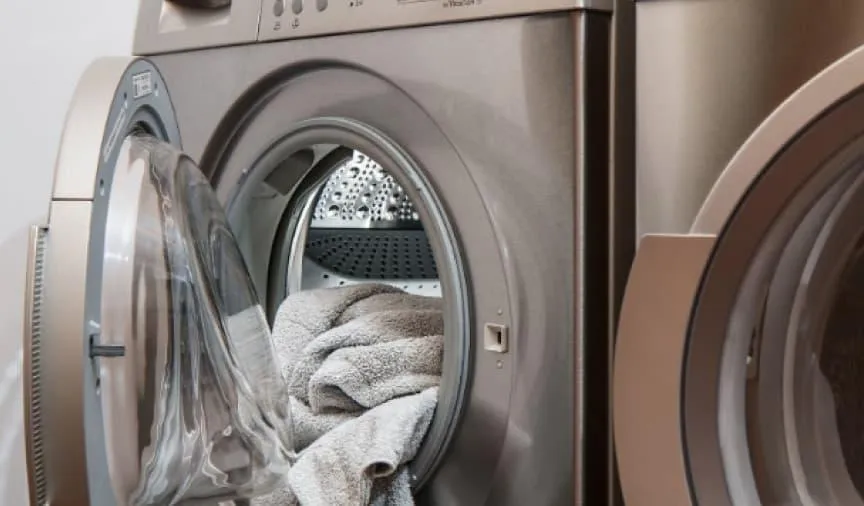
Repairing a refrigerator in your Clovis, CA home is a great idea. Don't just replace the refrigerator without knowing if it can be fixed. Call Zip Appliance Repair & Service today at (559) 272-4265 about a refrigerator repair.
Washer Repair In A Zip
If you need a washer repair call our Team at (559) 272-4265, or visit our online scheduling page to request service.
Appliance Repair
HAVE A QUESTION, CALL (559) 272-4265
We Repair & Service Most Major Brands Including:
LG, Viking, Sub-Zero, Samsung, General Electric, Whirlpool, Maytag, Kenmore, Frigidaire, Electrolux




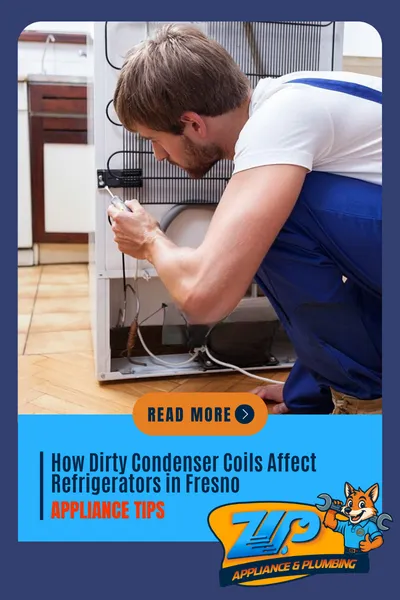
How Dirty Condenser Coils Affect Refrigerators in Fresno Warning Signs
“Dirty condenser coils may seem minor, but in Fresno’s harsh climate they quietly undermine refrigerator efficiency, drive up energy costs, and shorten appliance life—until early warning signs turn into costly breakdowns.” - Appliance Boss
Introduction
Behind every smoothly operating refrigerator lies a silent workhorse—condenser coils. These unassuming metallic loops are often hidden from view, yet they dictate whether your appliance hums efficiently or struggles in quiet distress.
In Fresno homes, where dust and heat frequently conspire against mechanical systems, these coils demand even greater attention. Neglect them, and the refrigerator gradually transforms from a reliable kitchen companion into an energy-draining liability.
Why Condenser Coils Are Critical to Refrigerator Performance
Condenser coils are not decorative components. They are thermodynamic regulators responsible for expelling heat extracted from inside the refrigerator.
Without them functioning at peak capacity, the entire cooling cycle becomes compromised. The appliance works harder, consumes more energy, and ultimately delivers inconsistent results. Precision cooling depends on their cleanliness and conductivity.

Understanding How Refrigeration Cooling Systems Work
A refrigerator operates through a continuous cycle of compression and expansion. Refrigerant absorbs heat from the interior, then travels through coils where it releases that heat into the surrounding air.
This exchange is delicate. Any obstruction in the system—especially dirty condenser coils—disrupts the equilibrium, forcing the compressor to overcompensate. The result is inefficiency disguised as normal operation.
The Role of Condenser Coils in Heat Dissipation
Condenser coils function as thermal exhaust pathways. They convert high-pressure refrigerant vapor into a cooler liquid state by releasing absorbed heat into the ambient environment.
When clean, this process is seamless. When coated in dust or grease, heat becomes trapped, creating a bottleneck effect that strains the entire refrigeration system.
How Dirty Condenser Coils Affect Refrigerators in Fresno Warning Signs Overview
In Fresno’s climate, coil contamination manifests quickly. The warning signs are often subtle at first—longer cooling cycles, mild temperature inconsistencies, or increased energy usage.
Left unchecked, these symptoms evolve into mechanical fatigue, compressor overheating, and eventual system failure. Early recognition is essential.
Why Fresno Climate Makes Coil Maintenance Even More Important
Fresno’s environment is uniquely challenging. Dry air carries fine particulate matter that infiltrates appliances effortlessly. Combine this with seasonal heat waves, and condenser coils become magnetized dust traps.
The result is accelerated fouling compared to more temperate regions. Maintenance intervals that might suffice elsewhere often fall short here.
Dust, Heat, and Airborne Debris in Fresno Homes
Microscopic dust particles circulate constantly in Fresno households. Over time, they settle on condenser coils, forming insulating layers that inhibit heat transfer.
Heat exacerbates the issue. As ambient temperatures rise, refrigerators must work harder, compounding the inefficiency caused by restricted airflow.
Common Causes of Dirty Condenser Coils
Several household factors contribute to coil contamination. It is rarely a single cause, but rather a convergence of environmental and behavioral influences.
Kitchen Grease and Household Air Contaminants
Cooking oils and airborne grease particles subtly migrate through the air. Once they reach the coils, they adhere to surfaces and form sticky residues that attract more debris.
This creates a stubborn, adhesive layer that is difficult to remove without proper cleaning techniques.
Pet Hair, Dust Buildup, and Poor Ventilation
Homes with pets experience accelerated coil fouling. Fur and dander circulate freely and settle in low-airflow zones behind or beneath refrigerators.
Poor ventilation compounds the issue, trapping contaminants in stagnant pockets of air.
How Dirty Condenser Coils Affect Refrigerator Efficiency
Efficiency declines are not abrupt; they are gradual and deceptive. The refrigerator continues to function, but at a hidden energetic cost.
Increased Energy Consumption and Higher Utility Bills
As coils lose their ability to dissipate heat effectively, the compressor runs longer cycles. This extended operation translates directly into higher electricity consumption and inflated utility bills.
The inefficiency often goes unnoticed until billing cycles reveal the discrepancy.
Overworked Compressor and System Strain
The compressor is the heart of the refrigeration system. When condenser coils are obstructed, it must exert excessive effort to maintain temperature stability.
This chronic overexertion leads to premature wear and eventual mechanical failure.
Temperature Fluctuations Inside the Refrigerator
Inconsistent cooling becomes apparent when internal temperatures begin to fluctuate unpredictably. Some sections may remain too warm while others become excessively cold.
This imbalance compromises food preservation and overall appliance reliability.
Food Spoilage and Reduced Shelf Life
Temperature instability accelerates food degradation. Perishables spoil faster, odors intensify, and food safety becomes compromised.
A poorly maintained coil system indirectly affects household health and food economics.
Early Warning Signs of Dirty Condenser Coils
Recognizing early indicators is crucial for preventing escalation. These symptoms often precede major failures.
Refrigerator Running Constantly Without Stopping
Continuous operation is a classic sign of thermal inefficiency. The appliance struggles to reach set temperatures and never truly rests.
Warm Back Panels or Exterior Heat Build Up
Excess heat radiating from the refrigerator’s rear or sides indicates poor heat dissipation. The coils are likely encased in insulating debris.
Unusual Clicking or Buzzing Sounds
Mechanical strain often manifests audibly. Relays, fans, and compressors may produce irregular sounds when operating under stress.
Inconsistent Cooling in Different Refrigerator Zones
Uneven temperature distribution suggests airflow disruption within the cooling system, often linked to condenser inefficiency.
Frost Buildup and Irregular Ice Production
Ice makers may behave erratically when system balance is disrupted. Frost accumulation becomes uneven or excessive.
Advanced Warning Signs of Coil Failure
At this stage, the system is nearing critical stress thresholds.
Compressor Overheating and Frequent Cycling
The compressor may cycle on and off rapidly or run excessively hot. This is a strong indicator of systemic strain.
Burning Smell or Electrical Strain Indicators
A faint burning odor should never be ignored. It suggests electrical components are under duress or overheating.
Complete Cooling Failure Risks
If left unresolved, dirty coils can trigger total system shutdown, rendering the refrigerator inoperable.
How Often Fresno Homeowners Should Clean Condenser Coils
Frequency depends heavily on environmental exposure. In Fresno, more frequent cleaning is often necessary.
Recommended Cleaning Schedule for Dusty Environments
A general guideline suggests cleaning every three to six months. Homes with pets or high dust exposure may require shorter intervals.
Manufacturer Guidelines vs Real World Fresno Conditions
Manufacturer recommendations often assume ideal conditions. Fresno’s environmental realities demand a more aggressive maintenance schedule.
Step by Step Guide to Identifying Dirty Condenser Coils
Inspection is straightforward but must be approached with care.
Locating the Coils Behind or Beneath the Refrigerator
Coils are typically positioned at the rear or beneath the unit. Accessibility varies by model.
Visual Clues of Dust and Debris Accumulation
A visible gray or fuzzy coating indicates significant buildup. In severe cases, coils may appear almost insulated.
Safe Methods for Inspecting Without Damage
Inspection should be performed gently, avoiding bending or damaging delicate coil structures.
DIY Cleaning Methods for Condenser Coils
Homeowners can perform basic cleaning with the right tools and caution.
Using a Coil Brush and Vacuum Properly
A soft coil brush loosens debris, while a vacuum removes loosened particles. This combination is highly effective when done carefully.
Safe Cleaning Frequency for Homeowners
Regular light cleaning prevents heavy buildup and reduces long-term maintenance costs.
When DIY Cleaning Is Not Enough
In cases of severe contamination or mechanical strain, professional intervention becomes necessary.
Professional Refrigerator Maintenance Services
Technicians provide deep cleaning and diagnostic evaluation beyond surface-level maintenance.
Benefits of Expert Coil Cleaning and Inspection
Professionals can identify hidden issues, optimize performance, and extend appliance lifespan significantly.
Preventing Costly Repairs Through Regular Maintenance
Routine servicing reduces the likelihood of compressor failure and expensive part replacements.
Impact of Dirty Coils on Refrigerator Lifespan
Neglect shortens operational life dramatically.
How Overheating Shortens Appliance Durability
Heat stress accelerates material degradation and weakens mechanical components over time.
Long Term Damage to the compressor and Components
Sustained inefficiency places irreversible strain on internal systems, leading to early failure.
Energy Efficiency Benefits of Clean Condenser Coils
Clean coils restore optimal thermal exchange and improve energy performance.
Lower Electricity Bills Through Proper Maintenance
Efficient heat dissipation reduces compressor workload and lowers energy consumption.
Improved Cooling Performance and Stability
Temperature consistency improves dramatically once coils are maintained properly.
Common Mistakes Fresno Homeowners Make
Many issues stem from simple oversight or improper maintenance habits.
Ignoring Early Warning Signs
Delaying action allows minor issues to escalate into major system failures.
Using Improper Cleaning Tools or Methods
Harsh tools or chemicals can damage delicate coil structures.
Blocking Airflow Around the Refrigerator
Poor placement restricts ventilation and accelerates dust accumulation.
Refrigerator Placement Tips for Better Coil Performance
Proper positioning significantly enhances efficiency.
Avoiding Heat Sources and Tight Spaces
Refrigerators should be placed away from ovens, direct sunlight, and confined cabinetry.
Ensuring Proper Ventilation for Efficient Cooling
Adequate airflow around the unit is essential for optimal heat dissipation.
Seasonal Maintenance Tips for Fresno Homes
Seasonal changes influence maintenance needs.
Spring and Summer Cleaning Priorities
Higher temperatures require more frequent inspections and cleaning.
Preparing Refrigerators for High Temperature Months
Pre-summer maintenance ensures resilience during peak heat conditions.
Choosing the Right Appliance Service in Fresno
Selecting a qualified technician ensures reliable results.
What to Look for in a Refrigerator Technician
Experience, certification, and diagnostic capability are key indicators of quality service.
Questions to Ask Before Scheduling Service
Inquire about methods, turnaround time, and maintenance recommendations.
Final Thoughts on How Dirty Condenser Coils Affect Refrigerators in Fresno: Warning Signs
Dirty condenser coils are more than a minor maintenance concern—they are a silent efficiency disruptor that gradually erodes cooling performance, inflates energy consumption, and shortens the operational lifespan of your refrigerator. In Fresno’s dust-prone, heat-intensive environment, this issue accelerates even further, turning a small buildup of debris into a significant mechanical burden.
What begins as subtle warning signs—longer cooling cycles, mild heat on the exterior panels, or slight energy spikes—can quickly evolve into compressor strain, temperature instability, and eventual system failure. The key takeaway is simple yet critical: early detection and routine maintenance are far more cost-effective than emergency repair.
Maintaining clean condenser coils is not just about appliance care; it is about preserving food safety, energy efficiency, and household reliability. A well-maintained refrigerator operates quietly in the background, while a neglected one steadily consumes more power and inches toward breakdown.
For homeowners in Fresno seeking dependable professional support, Zip Appliance Repair and Service provides expert refrigerator maintenance, diagnostics, and repair solutions tailored to local conditions. Visit https://zipappliancerepairfresno.com/ or call (559) 272-4265 to schedule service and keep your refrigerator running at peak efficiency year-round.



© 2026 ZIP APPLIANCE REPAIR & SERVICE LLC